
Industry Solutions
Anti-counterfeiting & Traceability
One tag, one identity, from the factory floor to the last mile.

Where the day goes wrong
The first sign of diversion is a price list.
Stock turns up in a channel it was never sold to, and nobody can say which shipment it came from. Read each unit as it changes hands and the route back to the batch and the channel is a lookup, not an investigation.
Why it is hardDiversion is a routing question, so the answer needs a read at each point where the goods change hands. Each read writes a place and a time against that unit's own identifier, which means the route back to a batch and a channel is a lookup on a record that already exists rather than an investigation that starts after the fact.
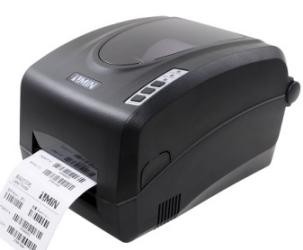
Our partEncoding happens on the line with the JD240TR or JT240TR, reading happens at the despatch lane with a JNR-E401N and JNA series antennas, and the three records join on the same identifier.
A copy is confirmed by the customer.
A counterfeit is only certain once someone sets it beside the real thing, and by then it is already on a shelf. Check the identity at the point of receipt and the difference shows up before the goods are accepted.
Why it is hardThis is where the memory banks matter and EPC alone is not enough. The EPC memory bank is writable, so a copied label can carry a copied EPC. The TID bank is written by the chip manufacturer and permalocked, so it cannot be duplicated at the chip level - which is why a verification at the point of receipt can tell a genuine unit from a re-labelled one before the goods are accepted.
Our partThe JNR-DSE03 and JNR-DSE06 desktop readers do close-range verification at a desk, and the JNC-DW07 gateway verifies as cartons pass, so the check happens where the goods are accepted rather than on a shelf later.
A fault means the whole batch comes back.
When a problem appears, the safe answer is to recall everything that might be affected, because the affected units cannot be told apart. Read each unit and the recall narrows to the units that actually carry the fault.
Why it is hardA recall narrows only when the affected units can be told apart from the ones that merely travelled with them. One identifier per unit does that, and User memory - where the chip includes it - is where a batch or a shift value can ride along with the item so the affected set is computed rather than guessed.
Our partPrinting and encoding on the line with the JD240TR or JT240TR binds the identity at the point the label is applied, and fixed reading at the dock closes the chain. Labels and media stay with your current supplier.
How RFID proves an identity
Authenticity rests on one property that a printed code does not have: a tag has a factory-programmed, permanently locked chip identity that sits alongside the writable item identifier. The EPC bank can be copied onto another label; the TID bank cannot be cloned, because it is burned into the silicon. That is the difference between a check that confirms a code was printed and a check that confirms the chip is the one it claims to be - and it is why the verification belongs at the point where the goods are accepted, not after they are on a shelf.
- TID is factory-programmed and permalocked
- A copied EPC cannot copy the TID
- Recall narrowed to the affected units
We supply the printing, reading and verification side. Labels and media stay with your current supplier.
What goes on the line

Checking at the desk or the door
Desktop readers for close-range verification and a gateway for passing cartons.
JNR-DSE03 · JNR-DSE06 · JNC-DW07
View the JNR-DSE family
Fixed reading
For conveyors, dock doors and despatch lanes, with JNA series antennas.
JNR-E401N · JNR-E801N · JNA series UHF antennas
View the JNR-E family
What hardware does this industry usually deploy?
A working configuration for this industry, taken from the equipment listed above. The band column gives the UHF RFID standards the hardware is built to.
| Role on site | Recommended models | UHF band | What it does |
|---|---|---|---|
| Encoding the identity | JD240TR · JT240TR | 902-928 MHz (US) / 865-868 MHz (EU) | UHF RFID printers print and encode each label as it is issued. |
| Checking at the desk or the door | JNR-DSE03 · JNR-DSE06 · JNC-DW07 | 902-928 MHz (US) / 865-868 MHz (EU) | Desktop readers for close-range verification and a gateway for passing cartons. |
| Fixed reading | JNR-E401N · JNR-E801N · JNA series UHF antennas | 902-928 MHz (US) / 865-868 MHz (EU) | For conveyors, dock doors and despatch lanes, with JNA series antennas. |
| In the field | JMDS65 | 902-928 MHz (US) / 865-868 MHz (EU) | For reception checks and market visits. |
How it runs
- Encode and bind A unique identifier is written to the label and bound to the unit record at the point the label is applied.
- Read at every handover The unit is read as it leaves the line, leaves the plant and reaches the channel.
- Verify and trace A check at the point of receipt confirms the identity, and an exception resolves back to the batch, the shift and the shipment from one record.
Questions we get
Does this stop counterfeiting outright?
Do you supply the labels and tags?
Where does the record live?
Tell us what you ship.
Send the product line, the number of units and where identity has to be checked, and we will come back with an encoding and read-point plan.
Email support@jnxrfid.comRelated industries: Supply chain & logistics · Manufacturing & industrial tooling · Healthcare & hospital SPD · Apparel & fashion retail · New energy & utilities · Banking & archives · Public sector & public assets · Aviation MRO & ground support · How we deliver
Contact: support@jnxrfid.com · All industry solutions