
HF / NFC RFID Printers
HF and NFC RFID printers for brand authentication, anti-counterfeiting, product provenance, and NFC customer engagement. JNXRFID covers desktop tagging with the JD240THR and high-volume production with the JT240THR industrial model — encoding ISO 15693 and ISO 14443A tags with free LabelSoft software.
Overview
What Is an HF/NFC RFID Printer?
An HF/NFC RFID printer writes data to High-Frequency (13.56 MHz) RFID inlays while printing the visible label. HF covers two standards: ISO 15693 (the workhorse for brand authentication and library/workflow tagging) and ISO 14443A (the standard behind NFC consumer engagement, access control, and contactless payments).
UHF printers handle retail inventory; HF/NFC printers handle identity. If you're protecting a luxury brand from counterfeits, issuing NFC-enabled product authenticity certificates, or labeling pharmaceuticals for serial traceability, you need an HF/NFC printer. JNXRFID ships two: the JD240THR desktop model for boutique and pilot programs, and the JT240THR industrial model for high-volume authentication production lines.
Product Lineup
Which HF/NFC RFID Printer Fits Your Workflow?
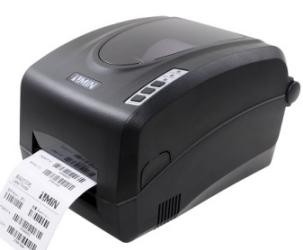 Desktop HF/NFC
JD240THR
Desktop HF/NFC RFID printer. Encodes ISO 15693 / 14443A tags in a compact footprint. Free LabelSoft. Ideal for boutique authentication and pilot programs.
View JD240THR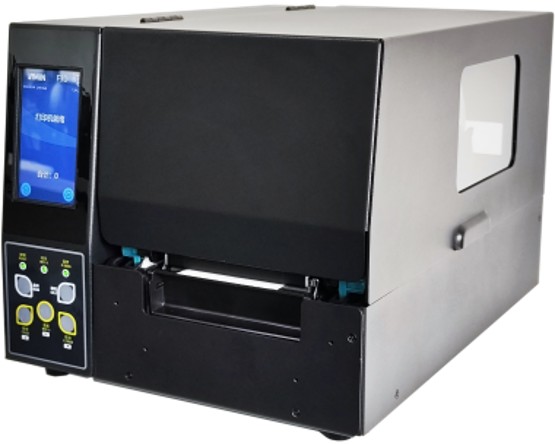 Industrial HF/NFC
JT240THR
Industrial HF/NFC encoder for high-volume authentication programs. 600 dpi, 1.5 mm media support, continuous-duty production.
View JT240THR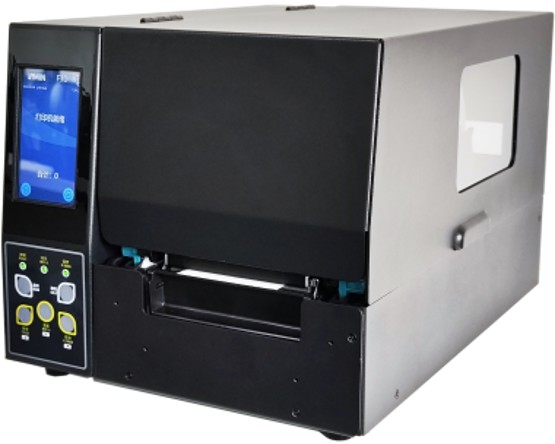 Industrial UHF
JT240TR
If your program also needs UHF retail inventory tags, the JT240TR is the UHF counterpart — same industrial platform, different frequency.
View JT240TR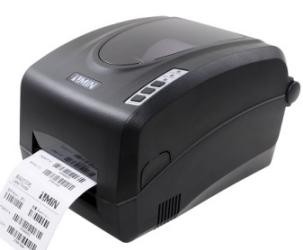 Desktop UHF
JD240TR
For retail inventory tagging at the desktop level, the JD240TR handles EPC Gen2v2 encoding in the same compact form factor.
View JD240TRLineup Comparison
HF/NFC RFID Printer Lineup — Specifications at a Glance
| Specification | JD240THR | JT240THR | JT240TR | JD240TR |
|---|---|---|---|---|
| Printing method | Direct thermal & Thermal transfer | HF RFID, Direct thermal & Thermal transfer | UHF RFID, Direct thermal & Thermal transfer | Direct thermal & Thermal transfer |
| Resolution | JD240THR-2U: 203 DPI (8 dots/mm); JD240THR-3U: 300 DPI (11.8 dots/mm); JD240THR-6U: 600 DPI (24 dots/mm) | JT240THR-F2: 203 DPI (8 dots/mm); JT240THR-F3: 300 DPI (11.8 dots/mm); JT240THR-F6: 600 DPI (24 dots/mm) | JT240TR-F2: 203 DPI (8 dots/mm); JT240TR-F3: 300 DPI (11.8 dots/mm); JT240TR-F6: 600 DPI (24 dots/mm) | JD240TR-2U: 203 DPI (8 dots/mm); JD240TR-3U: 300 DPI (11.8 dots/mm); JD240TR-6U: 600 DPI (24 dots/mm) |
| Max. print width | JD240THR-2U: 4.25" (108 mm); JD240THR-3U/6U: 4.15" (105.6 mm) | JT240THR-F2: 4.25" (108 mm); JT240THR-F3/F6: 4.15" (105.6 mm) | JT240TR-F2: 4.25" (108 mm); JT240TR-F3/F6: 4.15" (105.6 mm) | JD240TR-2U: 4.25" (108 mm); JD240TR-3U/6U: 4.15" (105.6 mm) |
| Max. print length | JD240THR-2U: 157.5" (4000 mm); JD240THR-3U/6U: 78.7" (2000 mm) | JT240THR-F2: 157.5" (4000 mm); JT240THR-F3/F6: 78.7" (2000 mm) | JT240TR-F2: 157.5" (4000 mm); JT240TR-F3/F6: 78.7" (2000 mm) | JD240TR-2U: 157.5" (4000 mm); JD240TR-3U/6U: 78.7" (2000 mm) |
| Memory | 8 MB Flash ROM, 16 MB SDRAM | 32 MB Flash ROM, 16 MB SDRAM | 32 MB Flash ROM, 16 MB SDRAM | 8 MB Flash ROM, 16 MB SDRAM |
| Interfaces | RS-232, USB, Ethernet | USB, Ethernet | USB, Ethernet | RS-232, USB, Ethernet |
| Weight | JD240THR-2U: 2.85 KGS; JD240THR-3U/6U: 2.95 KGS | 12.5 KGS | 12.5 KGS | JD240TR-2U: 2.85 KGS; JD240TR-3U/6U: 2.95 KGS |
Values are reproduced verbatim from each model's specification table on this site; variant-dependent figures are listed per model variant.
Buying Guide
How to Choose an HF/NFC RFID Printer
1. Confirm your tag standard: ISO 15693 vs ISO 14443A
ISO 15693 is the standard for brand authentication tags (luxury goods, spirits, pharmaceuticals, art provenance) and item-level library tagging. ISO 14443A is the standard for NFC consumer engagement — tap-to-verify on smartphones, access control, and contactless payments. Both JNXRFID HF printers support both standards.
2. Match printer class to authentication volume
Boutique authentication programs (a few hundred to low-thousands of tags per month) fit the JD240THR desktop model. High-volume authentication production lines (luxury goods factories, pharma serialization, spirits bottling) need the JT240THR industrial model for continuous-duty encoding and 600 dpi label quality.
3. NFC payload and verification
NFC authentication typically requires writing a URL (with a unique serial) or encrypted payload to user memory, then locking the tag to prevent tampering. Look for per-tag verification, lock-bit support, and reject-on-failure handling — all standard on JNXRFID HF printers.
4. Dual-frequency programs
Many brands deploy both UHF (for retail inventory compliance) and HF/NFC (for authentication). If you run a dual program, the JNXRFID JD and JT platforms pair cleanly — same LabelSoft software, same workflow, different frequency modules. We support dual-fleet deployments during your evaluation period.
5. Software and integration
Every JNXRFID HF printer ships with LabelSoft at no cost — authentication template design, database binding, NFC URL encoding rules, and lock commands. For enterprise authentication platforms, our SDK supports integration with brand protection systems and serial number generators.
Technical resources
Free technical guides for this decision
HF/NFC answers a different question from UHF — proving authenticity rather than counting items at distance. If the deployment touches metal, the construction side needs its own reading.
- Why metal defeats an ordinary label — the mirror effect that leaves a tag reading metres in air and centimetres on the asset
- Six installation rules — cure time, orientation, and why a label on a trim panel has already lost its ground plane
Both guides, free: Tagging Metal Assets with UHF RFID (18 pages) · UHF RFID Printer-Encoders (33 pages).
FAQ
Frequently Asked Questions
What's the difference between HF and NFC RFID printers?
HF (High Frequency, 13.56 MHz) is the radio band; NFC (Near Field Communication) is a specific subset of HF built on ISO 14443A and ISO 15693 standards, designed for smartphone tap interactions. In practice, an 'HF RFID printer' and an 'NFC RFID printer' usually mean the same hardware — the difference is which tag standard the printer encodes (ISO 15693 for authentication tags, ISO 14443A for NFC consumer engagement).
When should I choose HF/NFC instead of UHF?
Choose HF/NFC when your goal is identity rather than inventory: brand authentication, anti-counterfeiting, product provenance, NFC tap-to-verify, access control, or pharmaceutical serialization. Choose UHF when your goal is retail inventory compliance, apparel source-tagging, logistics asset tracking, or any program requiring long-range bulk reads.
Can JNXRFID HF printers encode both ISO 15693 and ISO 14443A?
Yes. Both the JD240THR desktop and JT240THR industrial models encode ISO 15693 and ISO 14443A tags. This covers authentication tags (ISO 15693), NFC Type 2 tags (ISO 14443A), and NFC Forum tag types used in consumer-engagement programs.
Do JNXRFID HF printers support tag locking for anti-counterfeiting?
Yes. Lock-bit support is standard — you can lock EPC memory, user memory, and configuration bits to prevent tampering after encoding. For high-security authentication programs, our engineering team helps configure the lock strategy during your evaluation period.
What's the minimum order quantity?
Low MOQ. Authentication programs typically start with one desktop unit for pilot runs of a few hundred tags, then scale to industrial units as volume grows. Order one, test for 1-2 weeks, and decide with real data.
Test a HF / NFC RFID Printers in Your Own Workflow
Evaluation unit in 1-2 weeks, engineering support included, low MOQ. Response within 24 hours.
Request an Evaluation Unit