
Industry Solutions
Apparel & Fashion Retail
Every garment counted at the door, in the second it takes to walk through.

Where the day goes wrong
The count happens after the shutters come down.
A stock-take means closing the floor and counting by hand, so it runs a few times a year at best. Between counts the number on the screen drifts from the number on the rail. Read the stock where it hangs and the count becomes a walk down the aisle, not a night shift.
Why it is hardA garment tag is small, flexible and often folded against another tag, so the dense-population case is the normal case. That is what the slotted anti-collision scheme is for: the reader varies the number of slots in the round to match how many tags are answering, so a whole rail resolves in one pass instead of one item at a time. A handheld antenna with circular polarization is the other half, because a garment can be facing any direction on the rail.
Our partThe JMDS65 handheld reads a rail or a shelf in one pass with the floor still open, and the JMDT80 8-inch UHF tablet covers the aisle count where a larger screen is what the job needs.
The fitting room is where stock goes missing.
A garment goes into a cubicle and does not come back, and the shortage is found weeks later with no way to say when it left. Read the fitting-room entrance and the gap shows up the same hour, while the day is still open to fix it.
Why it is hardThe hard part at a doorway is not reading, it is not reading too much. A tag in the aisle will answer the same antenna that is watching the exit unless the zone is shaped: antenna gain sets how far the field reaches, beamwidth sets how wide, and front-to-back ratio keeps the energy from spilling behind the panel. Shaping the zone is what lets the software treat a crossing as a transaction.
Our partThe JNC-DW07 and JND-C09W doorways are aimed and powered for the opening they sit in, so a garment that belongs on the floor is not read as a loss. The software compares what it sees against the transaction, and we set that threshold with you rather than for you.
New stock waits in the back room.
Every carton is opened and every item scanned one at a time, so the delivery sits in the stockroom while the floor runs short of the sizes that sell. Read the carton as it arrives and the delivery is on the rail before the store opens.
Why it is hardA carton read at the back door is a bulk read again, but the identity has to exist before it can be read, and for retail that means the ticket carries the tag. Printing the ticket and encoding the chip in one pass is what removes the separate labelling step that keeps a delivery in the stockroom.
Our partThe JD240TR and JT240TR print and encode each ticket as it is issued, and a JNR-E401N with JNA series antennas reads the trolley in at the back door so the delivery is on the rail before the store opens.
How RFID reads a rail
Retail is where UHF RFID is hardest on the tag and easiest on the business case. A garment tag is cheap, thin and folded into a pile of other cheap, thin tags, so the reader is resolving a dense population rather than a single label, and it is doing it on a tag that can be facing any direction. Circular polarization and a well-matched read zone are what turn a pile of garments into a count. This layer sits alongside, not instead of, the barcode work at the till.
- Circular polarization tolerates orientation
- Shaped zone at the doorway
- Print and encode in one pass
We supply the printers, the readers, the antennas and the doorway, and we set the zone with your layout and your fixture heights.
What goes on the floor

Shop doorways and fitting rooms
Read a garment as it passes, with no handheld scan.
JNC-DW07 · JND-C09W · JND-E09A
View the RFID portal range
Goods-in and the stockroom
Read a carton or a trolley at the back door, where a cable run is not practical.
JNR-E401N · JNR-E801N · JNR-DG08 · JNA series UHF antennas
View the JNR-DG family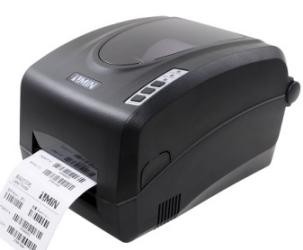

What hardware does this industry usually deploy?
A working configuration for this industry, taken from the equipment listed above. The band column gives the UHF RFID standards the hardware is built to.
| Role on site | Recommended models | UHF band | What it does |
|---|---|---|---|
| Shop doorways and fitting rooms | JNC-DW07 · JND-C09W · JND-E09A | 902-928 MHz (US) / 865-868 MHz (EU) | Read a garment as it passes, with no handheld scan. |
| Goods-in and the stockroom | JNR-E401N · JNR-E801N · JNR-DG08 · JNA series UHF antennas | 902-928 MHz (US) / 865-868 MHz (EU) | Read a carton or a trolley at the back door, where a cable run is not practical. |
| Ticket encoding | JD240TR · JT240TR | 902-928 MHz (US) / 865-868 MHz (EU) | UHF RFID printers that print and encode each ticket as it is issued. |
| Counting the floor | JMDS65 · JMDT80 | 902-928 MHz (US) / 865-868 MHz (EU) | A handheld and an 8-inch UHF tablet for aisle counts and price checks. |
How it runs
- Goods-in and encoding A ticket is printed and encoded at the point it is attached, and the delivery is read in at the back door.
- Floor and fitting room A garment passing a doorway or a fitting-room entrance is read as it goes, so an unreturned item shows up the same hour.
- Count where it hangs The handheld reads a whole rail or shelf in one pass, and the floor stays open while it does.
Questions we get
Can a doorway tell a garment leaving from one walking past?
Do we have to change our point-of-sale system?
Does GS1 Sunrise 2027 replace RFID?
Tell us about your floor.
Send the store size, how many items you carry and how often you count, and we will come back with a read-point layout and a parts list.
Email support@jnxrfid.comRelated industries: Supply chain & logistics · Manufacturing & industrial tooling · Healthcare & hospital SPD · New energy & utilities · Banking & archives · Public sector & public assets · Aviation MRO & ground support · Anti-counterfeiting & traceability · How we deliver
Contact: support@jnxrfid.com · All industry solutions