
Industry Solutions
Supply Chain & Logistics
A dock door that reads the whole pallet, not one carton at a time.
Where the day goes wrong
Receiving begins with a queue.
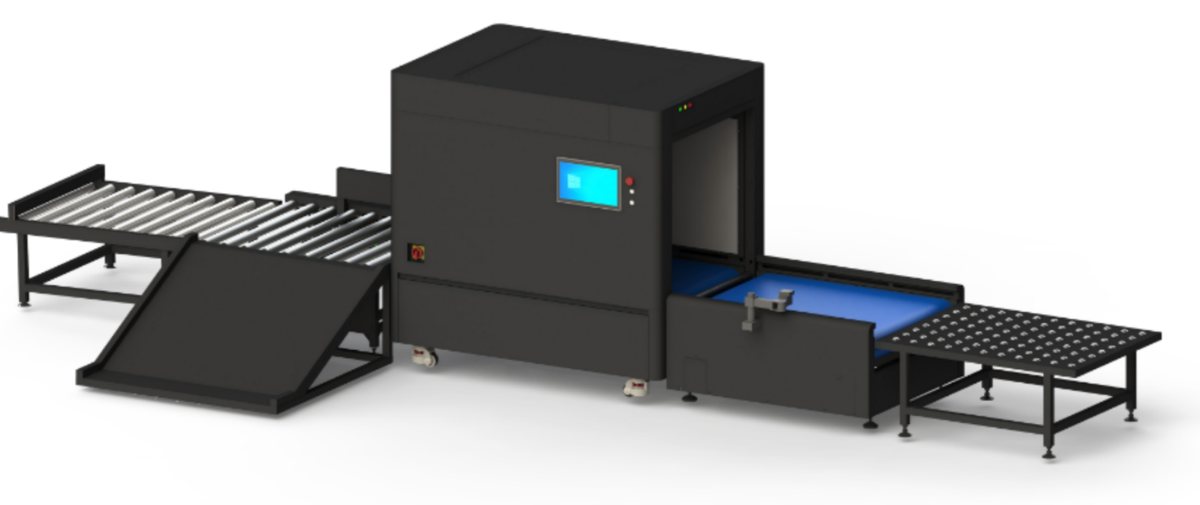
A trailer pulls in full and every carton has to be checked in by hand. The driver waits on the clock, the forklift waits for a free lane, and the first put-away slides past the shift start. Read the whole pallet as it rolls through the door and receiving stops setting the pace for the morning.
Why it is hardA UHF read is a far-field, backscatter link, so a tag answers only if enough RF power reaches its chip and enough of the scattered reply survives the trip back. A stacked pallet is the hard case: cartons in the middle are shadowed by the ones in front, wet or chilled goods absorb the field, and a tag facing the wrong way couples poorly with the antenna.
Our partThat is why the door is designed, not bought. The JNC-DW07 and JND-C09W gateways are placed and aimed against your pallet build and your racking, and we test the read with your goods before the order. Where the door is the wrong place to read, a JNR-E401N or JNR-E801N reader with JNA series antennas shapes a zone along the conveyor instead.
The count and the system never agree.
When a pallet arrives short, nobody notices until the paperwork is reconciled at month-end. Read every carton on the way in, and again on the way out, and both sides work from the same number on the same day.
Why it is hardA read is an event, not a state, so the count only reconciles if the same unit is read at both boundaries. EPC memory carries a unique identifier per unit, which means the carton read in at 06:10 is provably the same carton read out at 16:40, and the two numbers can be set against each other rather than reconciled by hand.
Our partWe place a documented read point on the inbound and the outbound path, and the readers expose a documented API and SDK so the count lands in the WMS you already run. The reconciliation stops being a month-end exercise because the two numbers were never allowed to diverge.
A wrong load is found by the customer.
Loading is still signed off against a paper pick list, so a swapped carton leaves the dock unnoticed and comes back as a complaint. Check the load against the order while the trailer is still on your yard, and the error never clears the gate.
Why it is hardVerifying a load is a set comparison: the identifiers read at the trailer against the identifiers on the pick list. That only works while the trailer is still on your yard, and it needs a zone that reads the freight going in without also reading the freight parked in the next lane, which comes down to antenna gain, beamwidth and front-to-back ratio.
Our partThe dock-door gateway does that comparison as the truck is loaded, so a swapped carton is caught at the gate. Where the yard is tight, an all-in-one JNR-DG08 keeps the antenna and the reader in one housing and removes the cable run that would otherwise limit where the read point can sit.
How RFID reads a pallet
A pallet read is not one big read. A passive UHF tag has no battery: it takes its operating power from the reader's carrier and answers by switching the impedance of its own antenna, which is why the reply is called backscatter. Both directions - power out to the tag and the weak reply back - have to clear their margin at once. Metal reflects the field and liquid absorbs it, and a dense stack means some cartons are simply in another carton's shadow. Get any one of those wrong and the pallet reads at 97%, which is another way of saying it does not read.
- GS1 EPC Gen2 (ISO/IEC 18000-63)
- 860-960 MHz UHF, regional bands
- Bulk read, no line of sight
Our part is the reading layer: the portal, the fixed reader and the antennas, plus the read-zone survey that decides where they go. The tags and labels stay with your current supplier.
What goes on the floor

Dock door gateways
Read a pallet as it passes, with no stop and no handheld scan.
JNC-DW07 · JND-C09W · JND-E09A
View the RFID portal range
Fixed readers and antennas
For conveyors, stretch-wrapped pallets and long read zones.
JNR-E401N · JNR-E801N · JNR-E1601N · JNA series UHF antennas
View the JNR-E family
All-in-one readers
Antenna in the housing, for doorways where a cable run is not practical.
JNR-DG06 · JNR-DG08 · JNR-DG10
View the JNR-DG family
What hardware does this industry usually deploy?
A working configuration for this industry, taken from the equipment listed above. The band column gives the UHF RFID standards the hardware is built to.
| Role on site | Recommended models | UHF band | What it does |
|---|---|---|---|
| Dock door gateways | JNC-DW07 · JND-C09W · JND-E09A | 902-928 MHz (US) / 865-868 MHz (EU) | Read a pallet as it passes, with no stop and no handheld scan. |
| Fixed readers and antennas | JNR-E401N · JNR-E801N · JNR-E1601N · JNA series UHF antennas | 902-928 MHz (US) / 865-868 MHz (EU) | For conveyors, stretch-wrapped pallets and long read zones. |
| All-in-one readers | JNR-DG06 · JNR-DG08 · JNR-DG10 | 902-928 MHz (US) / 865-868 MHz (EU) | Antenna in the housing, for doorways where a cable run is not practical. |
| Handheld | JMDS65 | 902-928 MHz (US) / 865-868 MHz (EU) | For cycle counts and exceptions in the aisles. |
How it runs
- Pallet receiving The pallet rolls through the door gateway and the count reaches the WMS before the forklift clears the lane.
- Put-away and location check The handheld confirms the bin against the order, and a misplaced pallet is flagged on the spot.
- Outbound verification Cartons are read as the truck is loaded and checked against the pick list, so the paperwork closes at the gate rather than at month-end.
Questions we get
Can a gateway read a full pallet without stopping the truck?
Do we have to re-tag our stock?
Does the data reach our WMS?
Tell us about your dock.
Send the door width, the pallet height and how the goods are stacked, and we will come back with a read zone and a parts list.
Email support@jnxrfid.comRelated industries: Manufacturing & industrial tooling · Healthcare & hospital SPD · Apparel & fashion retail · New energy & utilities · Banking & archives · Public sector & public assets · Aviation MRO & ground support · Anti-counterfeiting & traceability · How we deliver
Contact: support@jnxrfid.com · All industry solutions